




 Facebook
 Instagram




What Should Be the Stair Inclination Angle?
-
Posted by
Stairs Sowosz
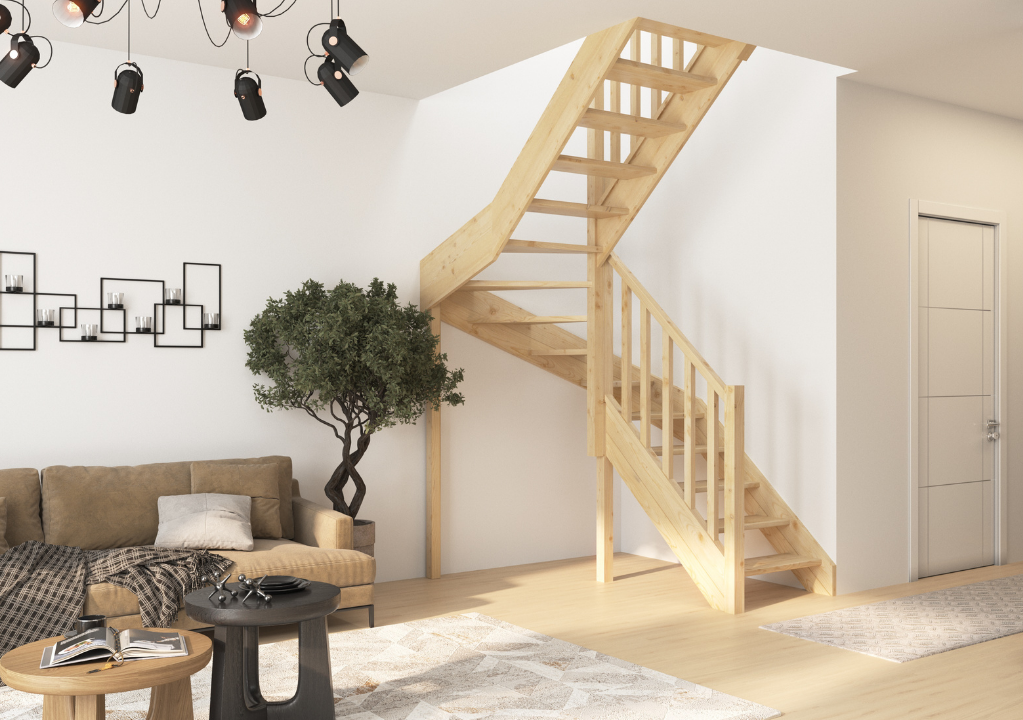
When designing stairs for a home, you need to consider not only the visual aspect but also numerous technical parameters that affect the later use of the stairwell. The most important factors are comfort and safety, and one of the key elements influencing them is the stair inclination angle. So, what should it be?
Why Is the Stair Inclination Angle Important?
What do we mean by the stair inclination angle? It refers to the ratio of the riser height to the tread depth. This directly affects both the safety of using the stairs and the everyday comfort of household members. Moreover, the angle influences the length of the stair flight and thus the space it occupies. Designing stairs is often a compromise between space and comfort.
Stairs that are too steep (high inclination) are not recommended because:
- it is easy to trip when climbing up;
- slipping is more likely when going down;
- they are more physically tiring to use;
- they pose a risk especially for children and elderly people with limited mobility;
- they force unnatural stepping;
- they require a vertical posture and significant knee bending;
- they make carrying objects up and down stairs more difficult.
At the same time, in small homes, stairs that are too shallow (low inclination) take up a lot of space.
Featured Products
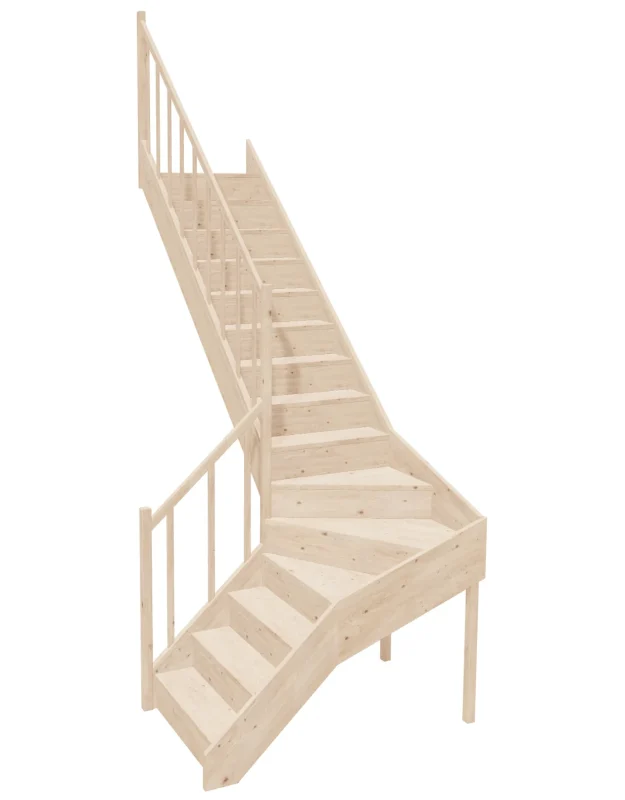
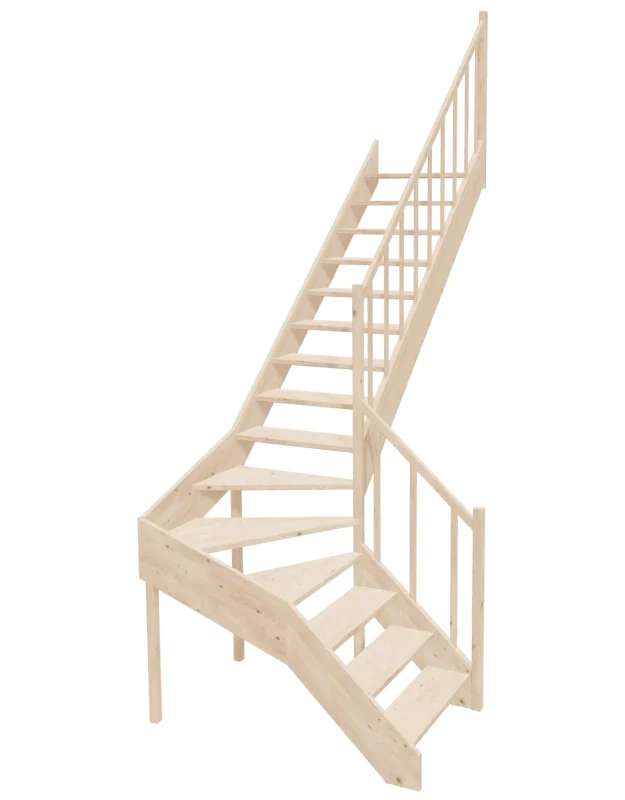
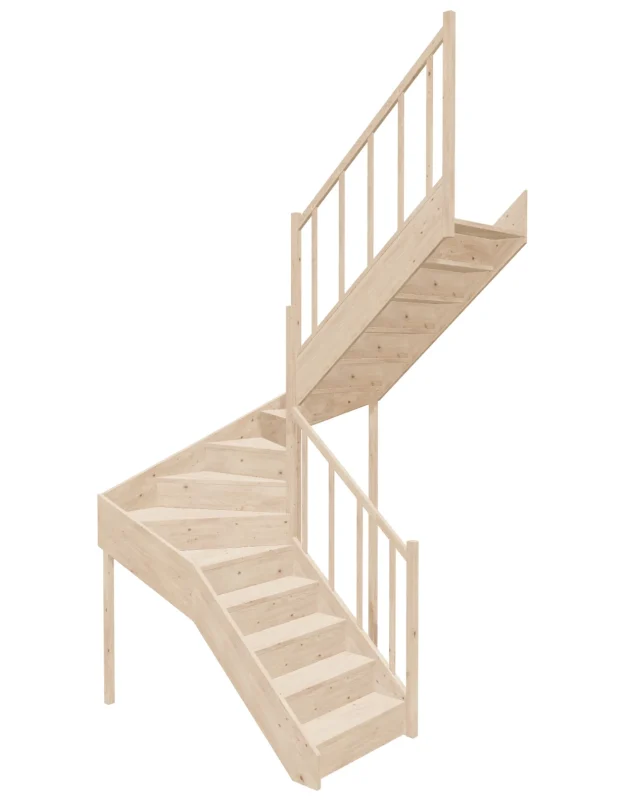
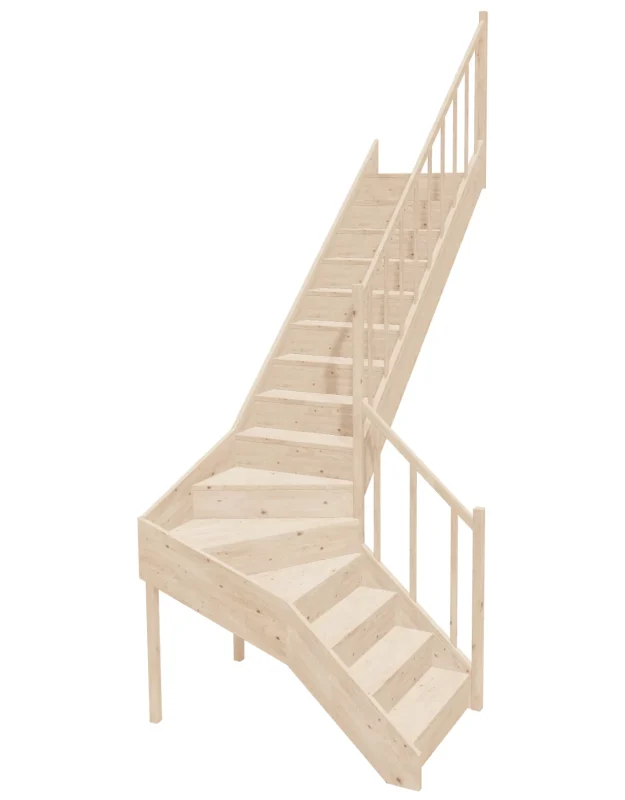
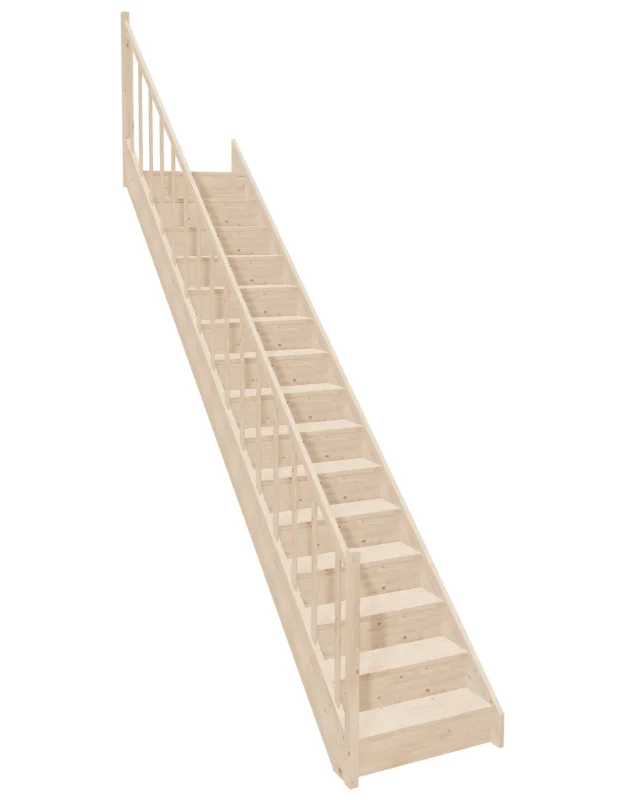
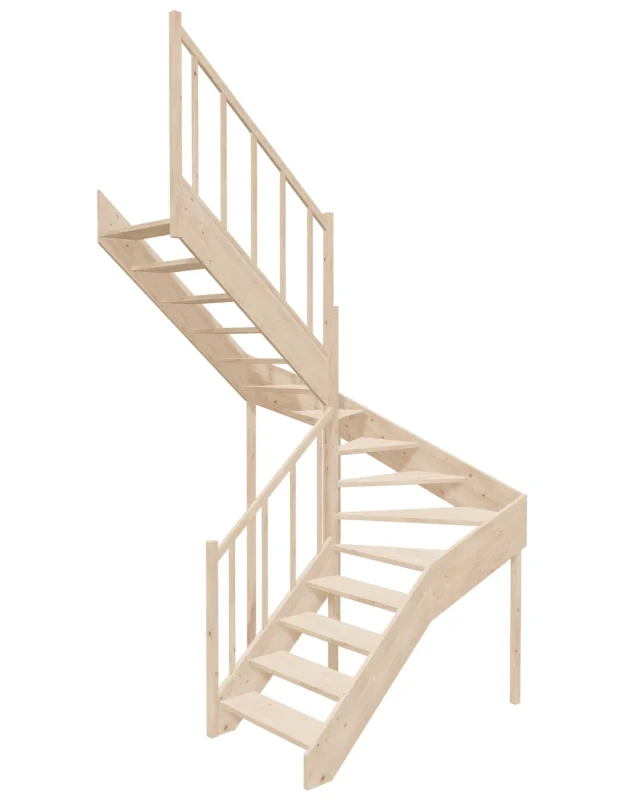
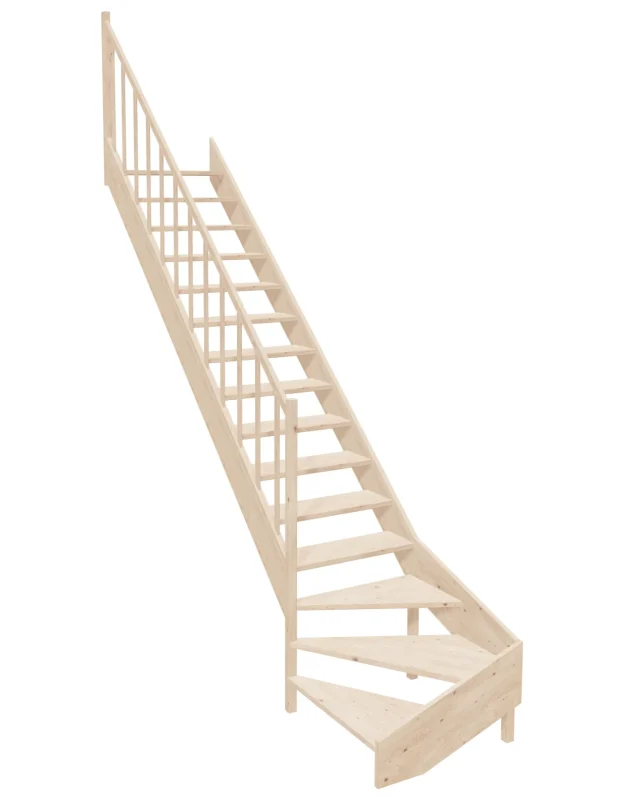
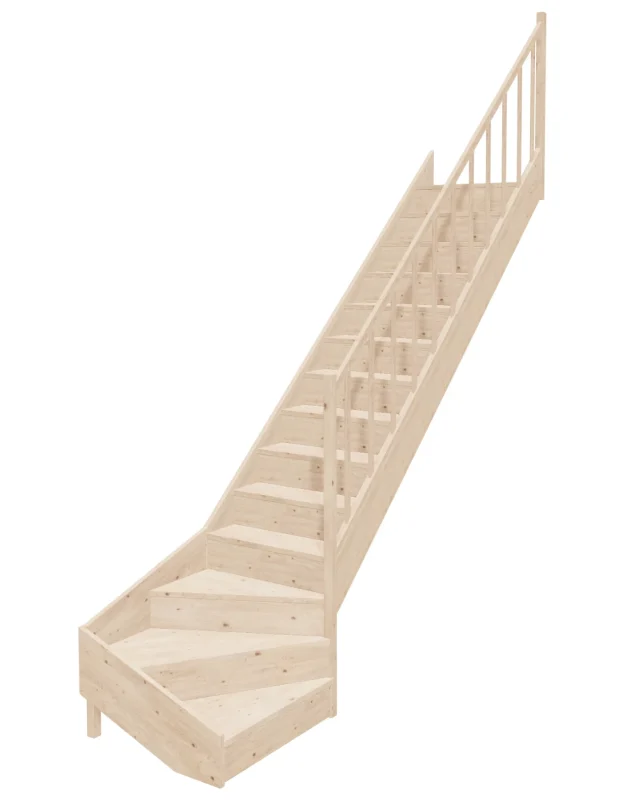
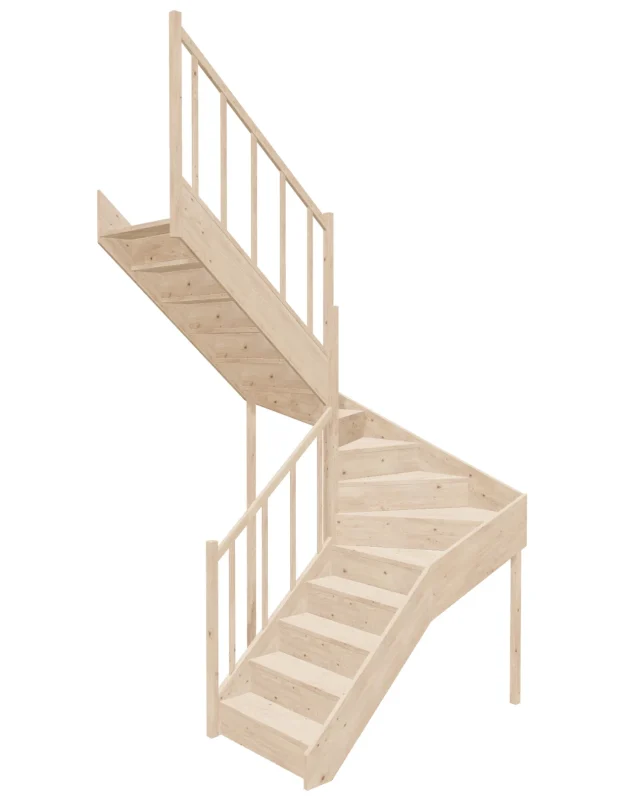
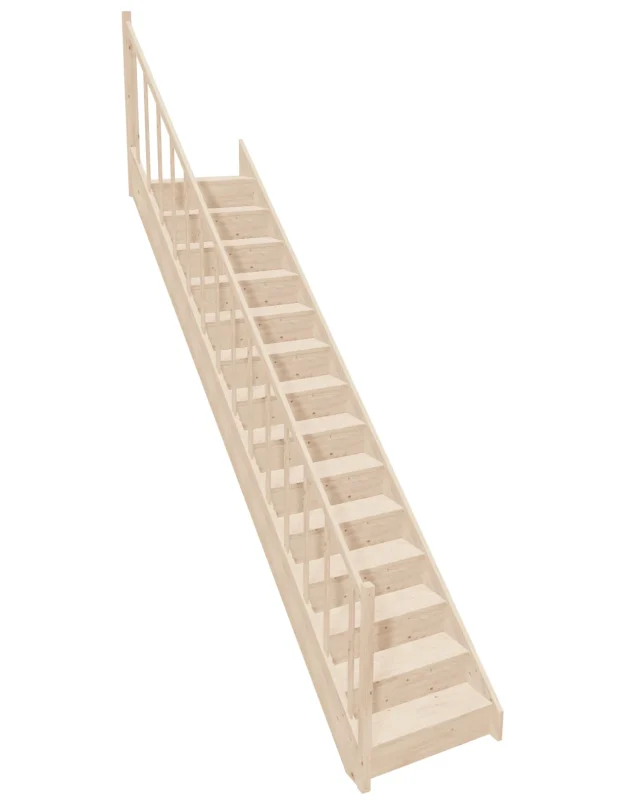
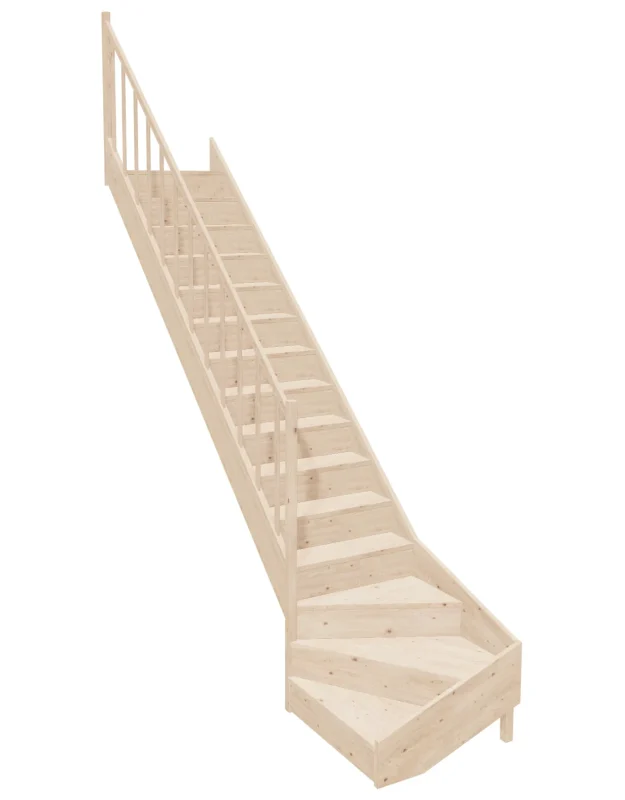
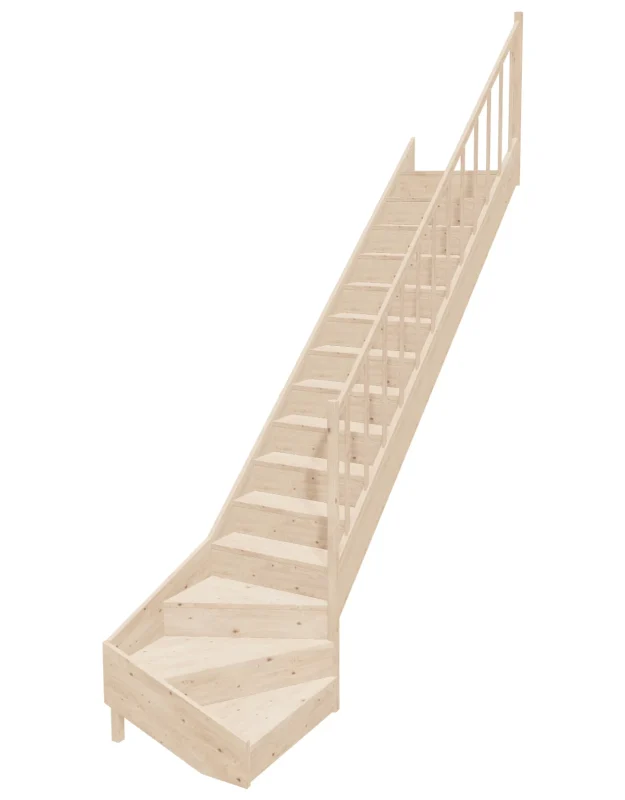
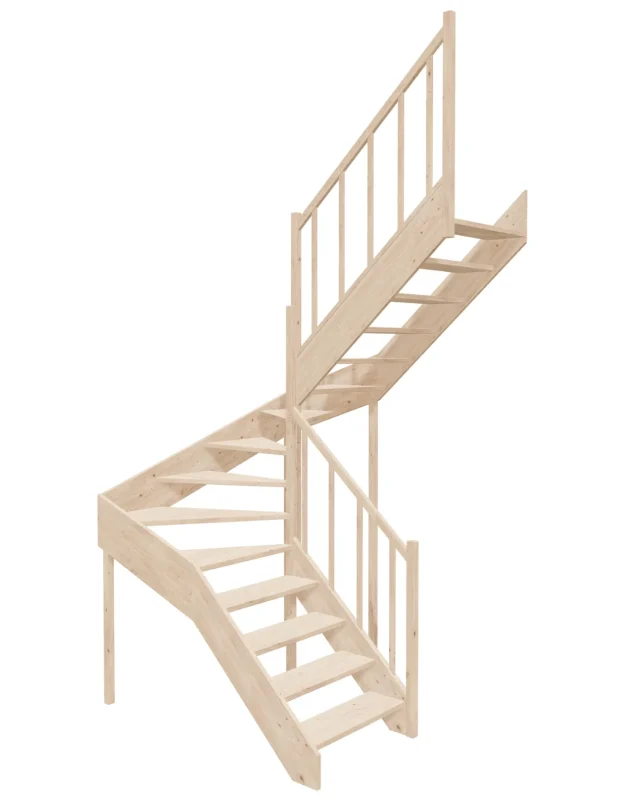
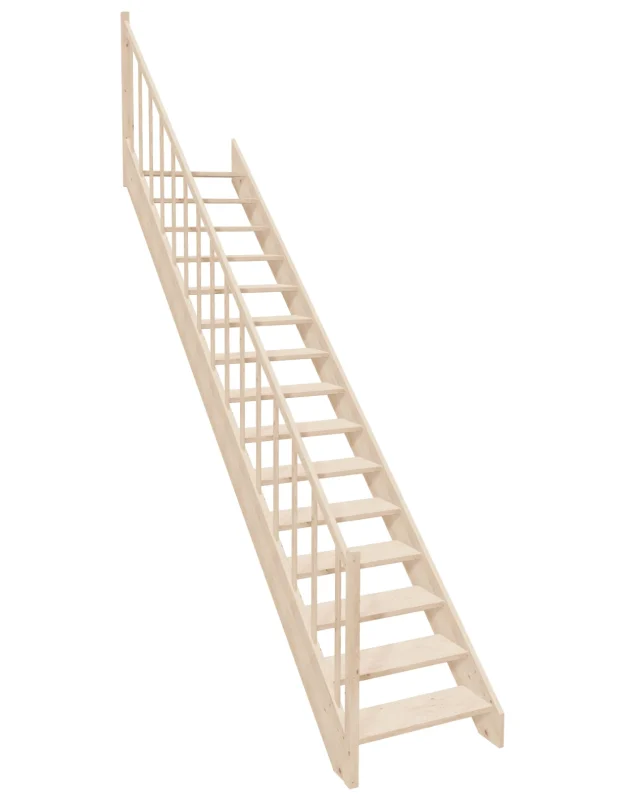
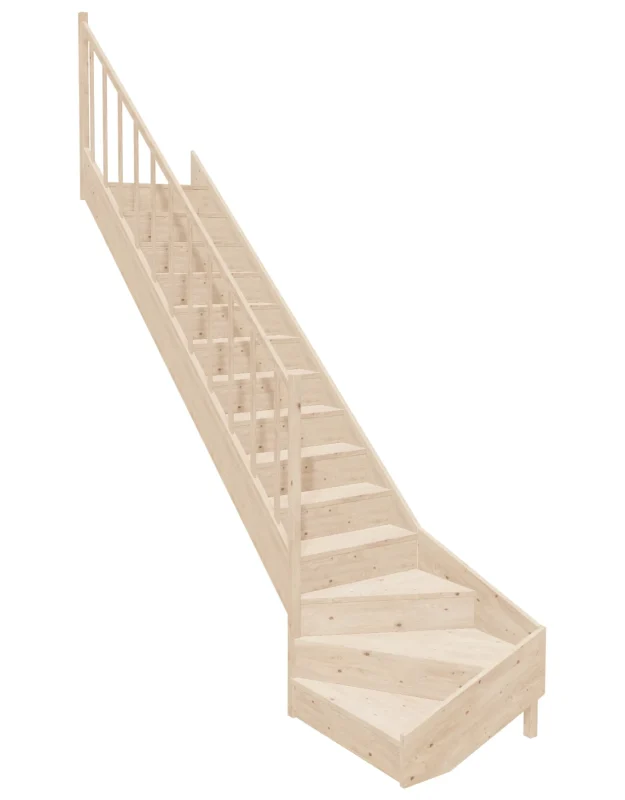
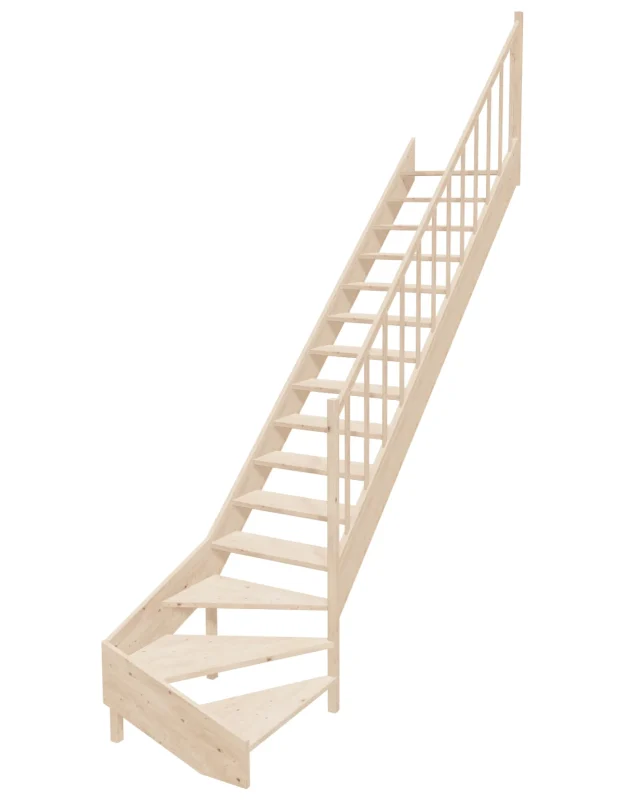
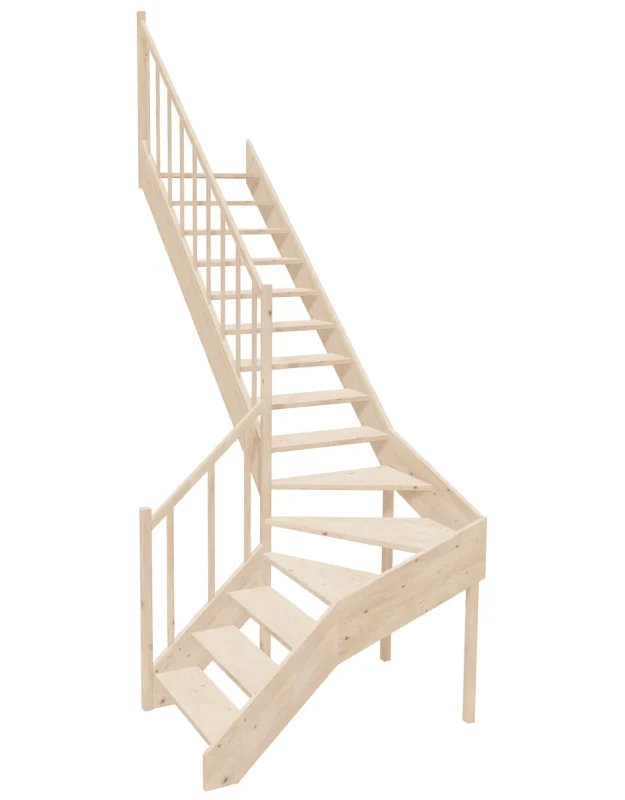
Steep Stairs – What Are They?
To be specific, stairs are considered steep when the inclination angle is between 44° and 50°. The tread depth in such stairs is usually 22–23 cm, and the riser height is 19.5–21 cm.
Steep stairs are chosen mainly in very limited spaces. They are typically used as auxiliary stairs, leading to basements, utility rooms, attics, or non-functional lofts.
Shallow Stairs – What Are They?
Conversely, shallow stairs have a low inclination angle, usually between 36° and 39°. The tread depth is typically 27–29 cm, and the riser height is 17–18 cm.
Where are such stairs used in larger single-family homes?
They are ideal where space allows, common in larger homes with multiple rooms on the upper floor. Their design prioritizes maximum comfort and safety, sometimes at the cost of using more materials.
Even when made from spruce (a budget-friendly option), their gentle inclination is key for comfort, especially in homes where stairs are frequently used to carry objects or where small children and elderly people live.
What Is the Optimal Stair Inclination Angle?
To ensure daily comfort and safety while not taking up too much space, a golden mean must be found. At SOWOSZ, we recommend stairs with the following parameters:
- Inclination angle: 40–43°
- Tread depth: 24–26 cm
- Riser height: 18.2–19.3 cm
While each inclination angle has its place, a 40–43° angle is often chosen as a compromise in homes, balancing comfort, safety, and space efficiency. This optimal, average slope provides the following benefits:
- Ensures a natural and rhythmic leg movement, making climbing and descending less tiring than on steeper stairs;
- Facilitates everyday stair use, minimizing fatigue during frequent movement between floors;
- Makes carrying objects safer;
- Enables effective use of space in the home.
Besides the inclination angle and tread/riser dimensions, consider these essential parameters when designing stairs:
- Flight width: minimum 80 cm, ideally 90–95 cm;
- Number of steps per flight: if more than 17, include a landing;
- Handrail height: ideally 90 cm above the preceding step;
- Material: at SOWOSZ we produce wooden stairs —timeless, durable, and safe, using spruce for excellent price-to-quality ratio;
- Lighting: optional, but improves safety when using stairs in the dark.
